Adaptive Bot Control at the Edge
Stop automated abuse before it reaches your applications
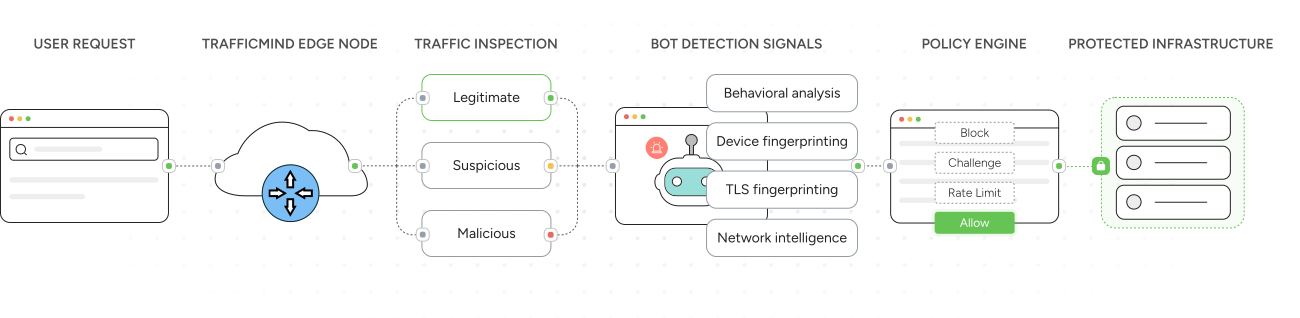
Trafficmind classifies incoming requests using behavioral signals, device fingerprints, and network intelligence to determine whether traffic originates from legitimate users, trusted automation, or malicious bots.
-
Real-time request classification and scoring
-
Edge-based detection and mitigation
-
Protection for authentication systems and APIs



Under attack?
-
Real-time request classification and scoring
-
Edge-based detection and mitigation
-
Protection for authentication systems and APIs
Bot Traffic Classification
Classify human traffic, trusted automation, suspicious requests, and malicious bots
Centralized Policy Control
Apply consistent bot management policies across applications, APIs, and digital environments
Adaptive Mitigation
Automatically adjust challenges, rate limits, and response logic based on request behavior and threat signals
Distributed Service Coverage
Extend bot protection across websites, APIs, platforms, and customer-facing services.
Multi-Signal Bot Detection at the Edge
Trafficmind analyzes incoming requests using multiple behavioral, technical, and network-level signals to accurately identify automated activity. Detection takes place at the edge of the network, enabling malicious requests to be stopped before they impact applications or backend infrastructure.

Behavioral Analysis
Evaluate navigation paths, interaction timing, and request behavior to identify activity inconsistent with legitimate users
Browser Fingerprinting
Analyze browser properties, execution environments, and client characteristics to identify automation frameworks attempting to appear legitimate
Network Intelligence
Assess IP reputation, proxy usage, and suspicious traffic patterns to detect bot infrastructure and malicious traffic clusters
Session Analysis
Review session continuity, request sequencing, and navigation logic to identify automation attempting to simulate human interaction
Adaptive Risk Scoring
Assign a dynamic risk score to each request based on multiple signals, allowing mitigation policies to respond according to threat level
Challenge Orchestration
Trigger progressive verification or JS challenges when signals indicate suspicious automation, reducing false positives while disrupting bots
Aligned with the OWASP Automated Threats to Web Applications Framework
Trafficmind Bot Management detects and mitigates automated traffic targeting authentication systems, APIs, and transactional workflows. Behavioral analysis, request pattern monitoring, and adaptive policy enforcement help teams identify malicious automation and control how automated traffic interacts with protected services.

Credential Stuffing Protection
OWASP OAT-008
Detect abnormal authentication activity and block automated credential testing targeting login endpoints

Account Takeover Prevention
OWASP OAT-001/2
Identify suspicious authentication patterns and prevent automated attempts to access user accounts

Scraping and Data Harvesting Control
OWASP OAT-011
Detect automated extraction of pricing, product data, and proprietary content from websites and API.

Automated Account Registration Detection
OWASP OAT-007
Identify abnormal signup behavior and block automated creation of fraudulent accounts

Inventory Hoarding Mitigation
OWASP OAT-010
Detect automated purchasing activity targeting limited products, bookings, or ticket inventory

API Abuse Protection
OWASP OAT-019
Monitor API request behavior and mitigate automated probing, data extraction, and excessive request activity
Distributed Firewall Enforcement Architecture
Trafficmind inspects and filters network traffic across globally distributed edge nodes before it reaches protected infrastructure. Security policies are applied closer to traffic sources, helping reduce exposure while maintaining performance.
Real-Time Bot Detection Dashboard
Your Centralized Bot Controls
Trafficmind combines real-time threat detection with granular controls, making it easier to stop automated abuse across websites, APIs, and mobile-backed services. By processing incoming requests through adaptive signal analysis and machine-assisted classification, the platform helps separate unauthorized scripts from legitimate users with greater precision.
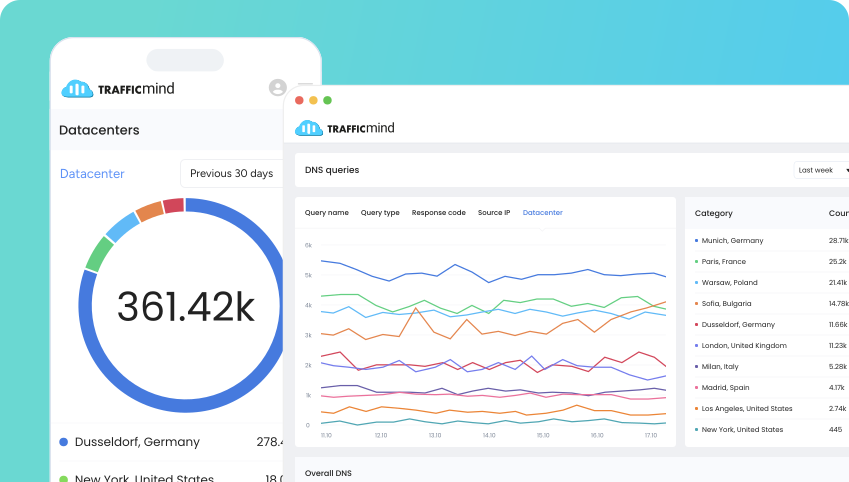
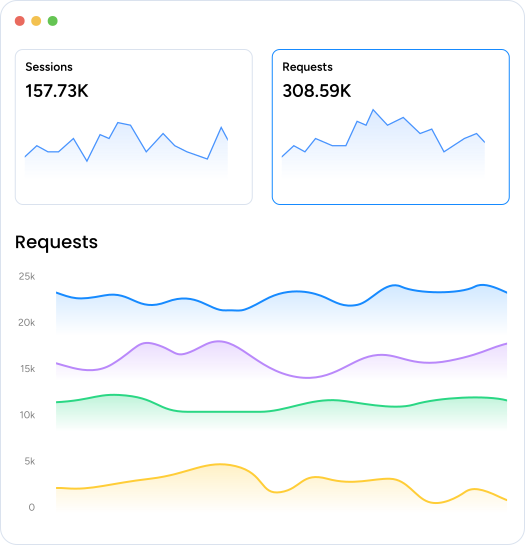
The dashboard shows live attack data with risk scores, sources, and impacted endpoints alongside regular traffic flow insights. Teams can review session traces and rule hits, test policy changes in sandboxed mode, and push updates globally in seconds when ready.
ML-Driven Bot Control Without Friction
Defend internet-facing applications from automated abuse using least-friction challenges and highly configurable controls.
Adaptive challenge mechanisms
Trafficmind uses a graduated set of responses to deter bot traffic with minimal friction, starting with device fingerprinting, slowdowns, and JavaScript challenges, then escalating to CAPTCHAs or blocking where risk warrants stronger enforcement.
Customizable rules engine
Use templates for allowlists, blocklists, and rate-limit rules for rapid deployment, while also applying fine-grained controls globally or to individual endpoints as needed.
API protection
Protect partner-facing and internal integrations through strict token checks, schema validation, and request pattern controls that help contain scripted abuse without disrupting trusted traffic.
Provider-Ready Control Model
Built for Platforms and Service Providers
Trafficmind Bot Management supports both enterprise environments and multi-tenant service delivery. Organizations can deploy bot protection across multiple applications and customer environments from a centralized control plane.
- Per-application and per-endpoint policy tuning
- Tenant-aware protection for shared platforms
- Centralized governance across multiple properties
- Consistent enforcement across websites, APIs, and mobile-backed services
- Operational controls suited to managed service delivery
Policy Lifecycle and Safe Rollout
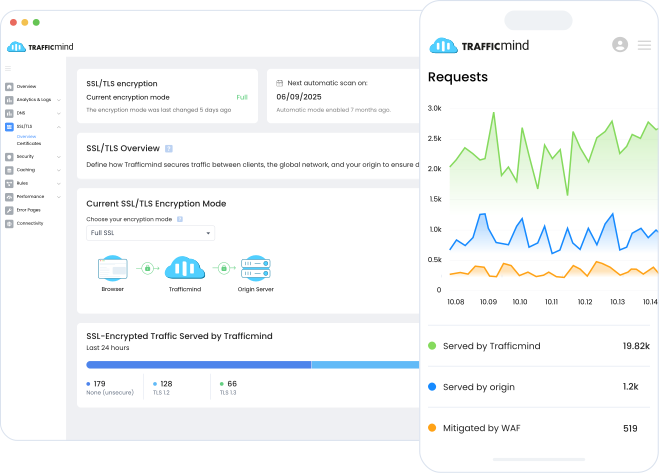
Trafficmind applies policy changes through controlled workflows designed to reduce enforcement risk, preserve visibility, and make automated-abuse controls easier to manage at scale.
Sandboxed Testing
Supports controlled review of policy behavior before broader rollout across customer services and shared environments.
Granular Endpoint Controls
Enables more precise tuning for authentication flows, transactional paths, APIs, and other operationally sensitive endpoints.
Rapid Adjustment
Allows validated controls to be applied consistently across distributed edge and service environments.
Global Rollout
Helps teams refine response logic in line with changing traffic behavior and service conditions.
Auditability
Provides a clearer record of rule behavior, policy activity, and enforcement decisions across managed estates.
Bot Management Capability Matrix
Designed for MSSPs and hosting providers managing automated traffic across customer websites, APIs, hosted platforms, and other internet-facing services.
Detection
- Multi-signal bot detection
- Device integrity and fingerprint signals
- Timing-pattern analysis
- Reputation-based scoring
Response Controls
- Challenge mechanisms
- Slowdown / tarpit-style responses
- Rate limiting
- Blocking
- Isolation actions
Application Protection
- Website protection
- Mobile-backed service protection
- Sensitive endpoint controls
API Security
- Token validation
- Schema validation
- Request pattern controls
Rule Governance
- Allowlists / blocklists
- Per-endpoint tuning
- Sandboxed testing
- Global rollout
Operations
- Real-time dashboard
- Risk scoring
- Source visibility
- Impacted endpoint visibility
- Session traces
Bot Abuse Coverage and Response Controls
Trafficmind is designed to detect and mitigate the main classes of automated abuse that affect customer-facing applications, APIs, login flows, and transactional endpoints.
Account Protection
Detect credential stuffing, brute-force logins, and fake signups. Throttle or challenge hostile patterns.
Scraping & Harvesting
Disrupt automated collection of content, pricing, and inventory while preserving access for real users.
API Abuse Controls
Enforce token checks, schema validation, and rate-aware controls against scripted calls and misuse patterns.
Transaction Protection
Reduce scripted misuse of checkout flows, promo codes, and cart activity across transactional endpoints.
Traffic Quality
Filter non-human sessions and analytics pollution to preserve cleaner operational and marketing data.
Traffic Management
Apply contextual throttling to bot-driven floods while allowing search engines and approved automation.
Contact Us
Stop Automated Abuse Without Disrupting Users